COLOURFULWORLD

Monday, 6 November 2017

Monday Murals - Electrical boxes III

More of Porto's electrical boxes on Rua das Flores (Flowers street) near Sao Bento station.
The second and third box was painted by Porto artist MynameisnotSem.

For other murals from across the world follow this link:


Meaning: Oh love, this isn't to stretch out/sit down
Meaning : Look at these two going out. 


Although "picar o ponto" actually means "to clock in or clock out" in a work situation.


Friday, 3 November 2017

Portugal - Pena Palace, Sintra

We arrived by car and parked in one of the free parking areas a few hundred metres from the Pena Park entrance,  bought our tickets - 11,50€ (adults) and 9€ (from 6 to 17 years and seniors). The palace and park is open from 10am to 6pm. (If you visit two or more palaces you can get a cheaper combined ticket).

The Palace is located within a huge park with 85 hectares (210 acres) of forest and gardens, and both the park and the palace are Unesco World Heritage since 1995. The palace was built in such a way that it is visible from any point in the park, and the fact that it's built on the Sintra hills at the height of 500mt means it's also visible from the town below and from from areas further away.
Expect to see lots of people at this palace as 2,5 million people a year walk through it's rooms!! (A genuine statistic).

Originally a Monastery, it was purchased in 1838 by Fernando II, (Ferdinand of Saxe-Coburg and Gotha) an Austrian Prince who was the Portuguese Queen Maria II's second husband.

With the help of the German Baron Wilhelm Ludwig von Eschwege who was the architect and landscape designer, between 1838 and 1850, they proceeded to renovate and extend the palace. Unlike his cousin King Ludwig II who built the Neuschwanstein Castle, Fernando II was influenced by the Portuguese maritime explorations and the Manueline and Moorish styles of architecture, turning this into a colourful fairytale palace. 


The Gardens

On the long climb through the gardens to the Palace we saw a big lake with a tower in the middle and some ducks too, a greenhouse, an Arab pavilion with a fountain and an interesting tree that bent all across to the other side of the pathway.
A whole day could be devoted to the gardens....but we had to climb on.

 
The Palace

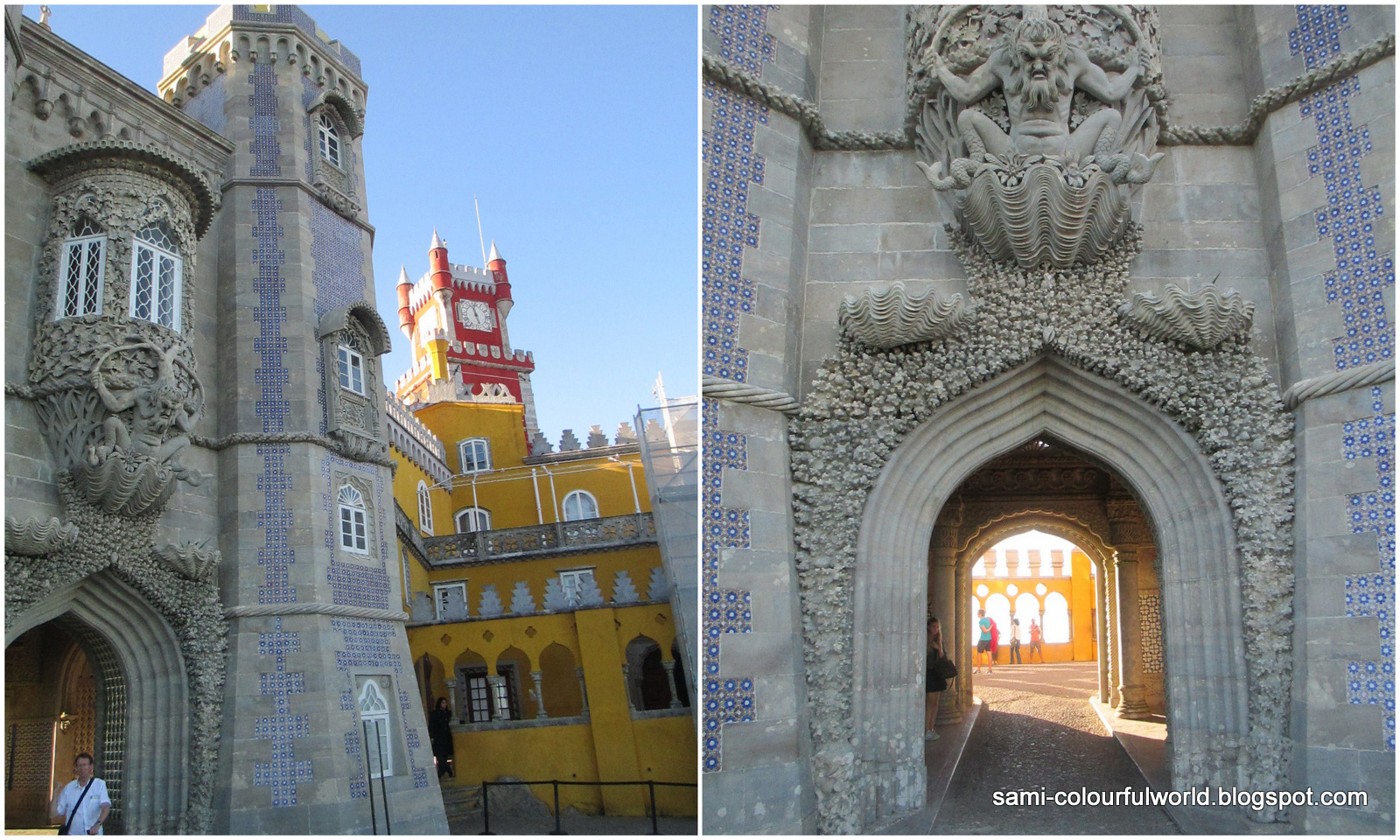
Finally we reached the Palace - there is plenty to admire, from tiles to elaborate windows and doors and the various styles and colours.                                            

Various views of the Palace
The Triton Gate - representing the Creation of the World with the mythological figure of Tritan, half man, half fish.
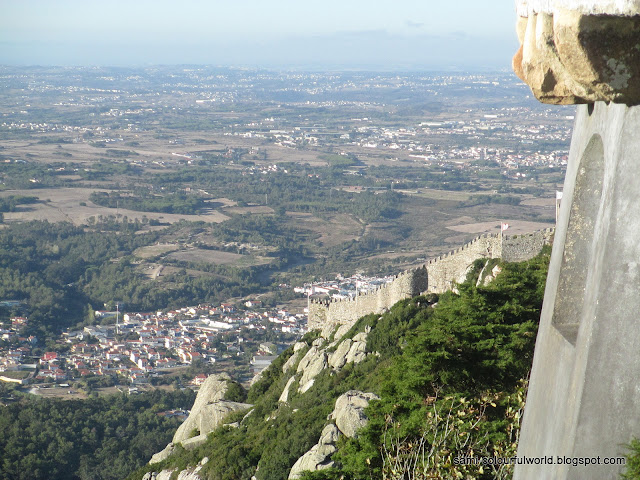
Through the gate you have a terrace - The Patio of Arches - from where the Castle of the Moors can be spotted. Turning back, on the wall facing the patio is an imitation of a window from the Convent of Christ in Tomar (about 140km north of Lisbon).

Triton Gate
Patio of Arches
View of  Castle of the Moors seen from the Patio of Arches at Pena Palace, and Sintra town below
The original Manueline window at the Convent of Christ and similar window at the Pena Palace on wall facing the patio
The rooms

Inside there were plenty of people that made the walk through the rooms slow and "people free" photography almost impossible!
The Dining Room - former refectory of the monks, was converted into the private royal family dining room. The original 16th century ceiling has vaulted arches and the walls were covered with tiles from the 19th century. The oak furniture was original and made in 1866. 


After the death of Queen Maria II, this was Ferdinand II and the Countess of Edla's bedroom.  After 1890 it was Queen Amelia's bedroom. The walls and vaulted arches are decorated in Moorish style.

This small room was the Atelier of the Countess of Edla. The furniture displayed here is made in papier-mache with mother of pearl inset.


And have a look at this magnificent adorned ceiling that drops on the corners. This yellow room with bed and little sitting area was the bedroom of Queen Amelia's lady in waiting.

A tea room at the time of Ferdinand II, became the telephone room during King Carlos reign. There was a strange looking cupboard with green doors ... The telephone is not the original one though.


The Arabic room intricate ceilings
The Great Hall was where receptions were held in Ferdinand's time.
The light pink walls, decorated ceiling, patterned walls, torchbearers, huge golden chandelier and stained glass windows made this a really grand room. 


And lastly the Stag room with all those stags on the domed ceiling and the huge white kitchen with lots and lots of iron pans.
I saw somewhere that the Stag room is used as a function room for weddings too.


From one of the balconies we had a fantastic view all the way to Lisbon and I could even make out the 25th April bridge in the distance as well as a view to the area below where we could see there was an outdoor cafe in one of the Palace's terraces, and that's where he headed for a bit of a rest and to have a drink and a chat.

Lisbon with the 25th of April bridge (middle right)
The 3 visiting Drs with my daughter and I on the balcony
The balcony from where we could see the terrace with an outdoor cafe
Some of the windows of the Palace

After coffee it was time to leave and return home. We walked the 600mt or so that would lead us to the main entrance and then walked down the road, past the park entrance where we entered via the gardens, walking past the entrance to the Castle of the Moors, until we found the parking lot.
As we left at around 5pm, it was a shock to find out the weather had changed and it was so cold, but that is Sintra with it's microclimate.
No wonder the next day my throat was sore and another cold was starting...

Our group walking back to the car
A pretty flower I found when we were walking to the car
The Castle of the Moors (ruins) seen from the street, on our way to the car

Not far from the Palace is the Chalet and Garden of the Countess of Edla, which we didn't get to visit.
The Countess was a Swiss/American Opera singer who married Fernando II, after the death of Queen Maria II at the age of 34 when she gave birth to their 11th child. Poor woman 11 kids at 34!!!
The chalet was built in the second half of the 19th century and is a typical Swiss chalet designed as a private refuge for the couple.

Image result for chalet elba pena palace
Chalet of the Countess of Edla (photo from net)

Image result for palacio da pena mapa interior
The park, the Pena Palace (left) and the Chalet of the Countess of Elba (top right)
And so ends the visit to Sintra. There's so much more to visit in Sintra, so hopefully I'll get to visit them in some future visit to Portugal.
Next week, Lisbon will be on the menu.
Have a lovely weekend.


Wednesday, 1 November 2017

Portugal - Sintra National Palace

About 20km from Cascais and 30km from Lisbon is the magical town of Sintra.
On this day, my daughter and I caught the 417 bus that travels from the Cascais bus station, (below the Cascais Villa shopping centre) and arrived at Sintra station, about 30 minutes later.

In Sintra we met up with the 3 Doctors visiting Portugal (2 of them working at the Clinic I work in) and we started our tour.
On the main road we walked past this 1922 Moorish influenced fountain. 


On the other side of that road a lot of quirky statues peppered the pavement, and there are also a few people selling arts and crafts.


Moorish Castle, Town Palace in the distance and various statues on the way to the Palace
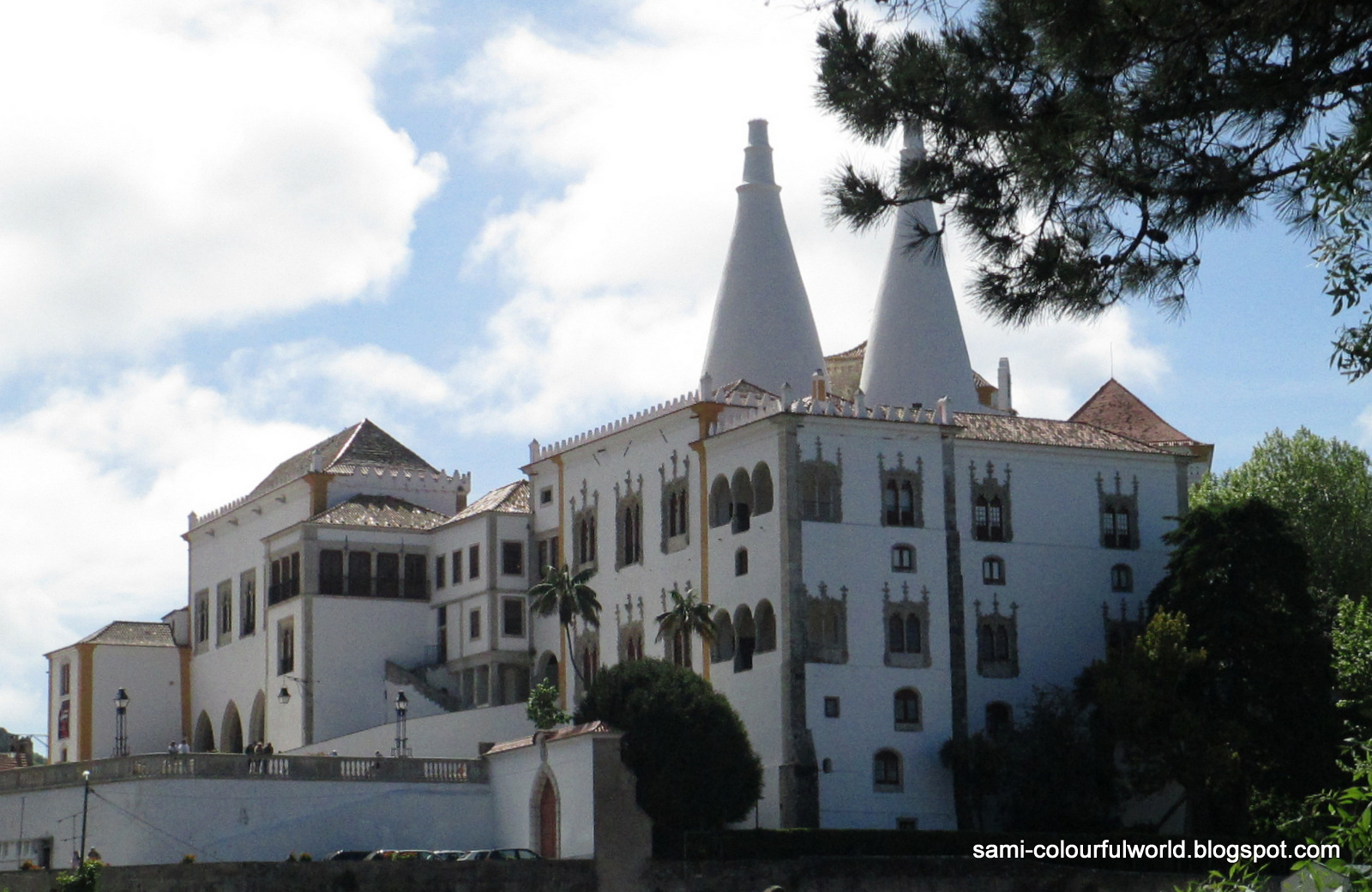
Sintra National Palace or Town Palace

Sintra National Palace

Our first visit was to the Sintra National Palace or Town Palace (Palacio da Vila) right in the village center.  This is one of the best preserved royal palaces in Portugal and was inhabited from the early 15th century until the late 19th century. It's now a Unesco World Heritage Site. 
Entry to the palace costs €9.00 for adults and seniors (over 65) and children (6 to 17) pay €7.50.

View of Sintra from one of the arches of the Palace. The Moorish castle can be seen atop the hill

The windows, arches, geometrical patterned tiles and interior courtyards show the Moorish links of the craftsmen who built and decorated the Palace. 

Queen Amelia, the consort of the last King of Portugal Carlos I, (assassinated in Lisbon in 1908) was very fond of the palace where they used to spend their holidays. When Portugal became a Republic in 1910, it became a national monument, and in 1940 it was restored to it's former splendour.

Top: Magpie room, King Sebastian's bedroom (16th century). Bottom: Jules Caesar room, and various items of furniture

The Walls & Ceilings

One of the first rooms we saw and the biggest room of the Palace, was the Swan Room. The 16th century ceiling is decorated in wood painted with 27 white swans, representing purity and fidelity and adorned by octogonal frames. The horseshoe shaped arches above the doors are adorned with green, grey and white tiles.

The Swan Room


The Magpie room is so named for the ceiling painted during the 15th century representing 136 magpies holding King John I motto "Por bem" (for good), and a rose on it's claws for the House of Lancaster to which his English wife Phillipa belonged. This was the room where foreign ambassadors and local dignitaries were received.

Ceiling of the Magpie room


The photo below shows the ceiling of the Mermaid room, the smallest division of the Palace, used as a "walk in robe". The ceiling bears the image of 4 mermaids playing musical instruments and in the middle a mermaid coming out of the sea.

The Galleon room's vaulted ceiling was decorated around the 17th century with vessels from the Portuguese, Dutch and Ottoman (Turkish) empire, who were the world's biggest maritime powers at the time.


The Galleon Room has lots of art hanging from it's wall 

Galleon room ceiling and Mermaid room ceiling


Painted in the 16th century, the Hall of Coats of Arms is the most impressive room of the Palace, with blue and white tiles covering all 4 walls depicting hunting scenes, and the golden octagonal cupola ceiling is painted with the coat of arms of 72 Portuguese noble families of the time. In the center is the Portuguese coat of arms and then the coats of arms King Manuel I 8 children (He actually had 13 children from 3 wives, so I presume those might be the children he had at the time the ceiling was designed). 
Just a look at this room makes the whole visit worthwhile!


Portuguese Coat of Arms and the one of the 8 children of King Manuel I


The Chapel, Kitchen & Gardens

The small rectangular chapel founded in the 14th century by King Diniz I, has it's walls painted with patterns and a wooden relief  geometric ceiling.

In the white kitchen those huge 33mt high chimneys dominate the huge room, with big wood fired ovens.  The chimneys are the Palace's most notable and iconic exterior feature.
In the huge dining room - The Manueline Hall,  a fabulous crystal chandelier dominates the room, and once again patterned tiles cover the bottom half of the room. This was the last area of the Palace to be built.


Manueline Hall


The Arab Room with a central fountain and lots of doors leading into it
Kitchen and Manueline Hall


The inner courtyard, was also tiled, and the palace had a nice garden with lots of herbs.
The beautiful windows, doors and tiles filled were just awesome.
Doors, windows, courtyard and gardens

  
Tiles (Azulejos)

King Manuel I decorated most rooms with multicoloured tiles specially made for him in Seville, Spain. These tile panels bear Islamic motifs lending an Arab feel to the rooms.


Pretty Arab tiles

As we sat relaxing in the garden for a while, my daughter researched some restaurants nearby and came up with a lovely one - Tascantiga - a tapas style restaurant, where we had lunch. The staff was friendly, the menu was great with lot's of choice, food was served quickly, so all in all this was a great find.
The restaurant is at the end of one of Sintra's uphill cobbled lanes, across the Palace - at Escadinhas da Fonte da Pipa 2. We ate inside, but there's also an outdoor area.
Even the toilets were quite "funny" and well decorated.

Tascantiga Restaurant
Sintra
View of the Moorish Castle from the garden of the Town Castle and me and the Drs in front of the Castle

After lunch we strolled through the village, browsed some shops, while one of the Drs went to fetch their car parked at the Station. He picked us up in front of the Palace and then we drove to the romantic Pena Palace on the hill. But that will be a story for another day...

Hope you enjoyed the visit to the Sintra National Palace.

National Palace of Sintra - Visit map - learn more on RoadTripsaroundtheWorld.com
Map of the Palace - photo from map given to visitors when buying a ticket

Note: Apart from the 417 bus from Cascais to Sintra, you can also take the 403 bus departing from the same spot, but doing the scenic coastal route via Cabo da Roca, the western-most point of Continental Europe, it takes 1 hour).